Most people have never watched a smoke alarm check and assume it is someone pressing a button on the way through. It is more than that, and knowing the steps makes the visit quicker for everyone. Here is exactly what we do at a Queensland home or unit, in the order we do it.
Before we arrive
The office books a time with the owner, or with the tenant if the property is rented. For rentals we contact the tenant by email, SMS and phone, and if we cannot reach them after reasonable attempts we tell the managing agent, who issues the entry notice the tenancy law requires. We need someone to let us in, and we need to reach the ceiling in every bedroom, the hallway and each level, so a clear path to those spots saves time.
Step 1: count the alarms against the law
Before touching anything we walk the home and compare what is there with what Queensland requires: an alarm in every bedroom, one in the hallway the bedrooms open onto (or between the bedrooms and the rest of the home if there is no hallway), and one on every level that has no bedroom, on the path to the way out. Missing locations go on the list straight away.
Step 2: test, clean and date every alarm
Each alarm gets the same four checks.
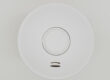
- Test: the test button is pressed and the alarm must sound.
- Clean: the alarm is cleaned the way its manufacturer says, usually by vacuuming the dust out, because dust is the most common reason a working alarm fails to detect smoke.
- Date: the manufacture date printed on the alarm is read. The law requires replacement within 10 years of that date, no matter how the alarm performs.
- Type: we confirm the alarm is photoelectric, complies with AS 3786-2014, and is powered the way the law allows, either hardwired or by a sealed 10 year battery.
Step 3: prove the interconnection
One alarm is set off and every other alarm in the home must sound with it. That is the legal definition of interconnected, and it is the check most homes fail the first time, because alarms were added over the years without being paired. Alarms that do not respond are noted for replacement or pairing.
Step 4: replace what the law says must go
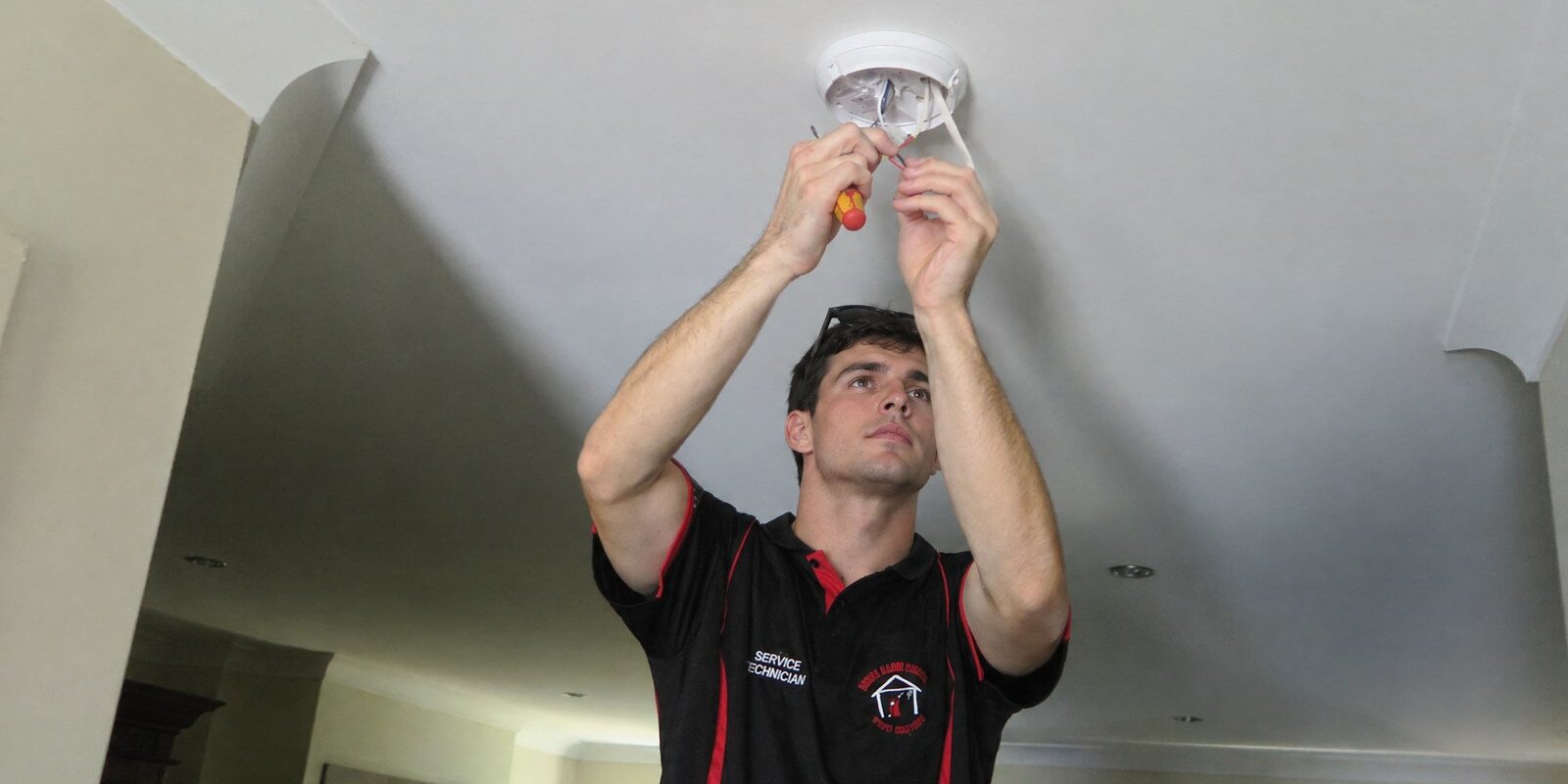
Three things get replaced on the day, with your go ahead: an alarm that does not sound when tested (the law says immediately), an alarm past 10 years from manufacture, and an alarm of the wrong type or in the wrong place where the home has to meet the full standard. Replacement alarms are lithium powered photoelectric interconnected alarms with a sealed 10 year battery, at our published per alarm price, paired and tested before we leave. If the alarm being replaced is hardwired, the law requires a hardwired replacement, which is electrical work for a licensed electrician, and we organise it rather than do it on the spot.
Step 5: record it
We photograph every alarm before and after, record the count, the types and the manufacture dates, and note when the next service falls due. The owner or managing agent is told the result. If you want a document, a Certificate of Compliance listing every alarm, its location, its date and the interconnection result is available on request once the invoice is paid, usually the same day.
Step 6: pay on the day
The invoice is settled when the work is done. Tap your card on the spot, or pay the emailed invoice online from your phone. If you are on the annual service plan, the visit is part of the plan: unlimited compliance checks during the year for one yearly fee per property, on our pricing page, and every alarm we supply is covered for its full 10 year life while you stay on it.
What we will not do
We do not work on fire systems in offices, shops or other commercial buildings, which the law reserves for licensed fire protection contractors, and we do not touch the common area systems in an apartment building, which belong to the building’s fire safety provider. Inside the home or the unit, everything above is ours.
Call the office on (07) 3349 0636, or send your details through the contact form and we’ll get back to you. Book my check. Brisbane, Logan, Ipswich, Redlands and Moreton Bay, for over 20 years.