Both are legal. Queensland lets you meet the interconnected smoke alarm standard with hardwired alarms or with sealed 10 year battery alarms that talk to each other wirelessly, and the law does not prefer one over the other. One rule decides which you must use, and after that it comes down to what your home already has and what you want to pay.
What the law actually requires
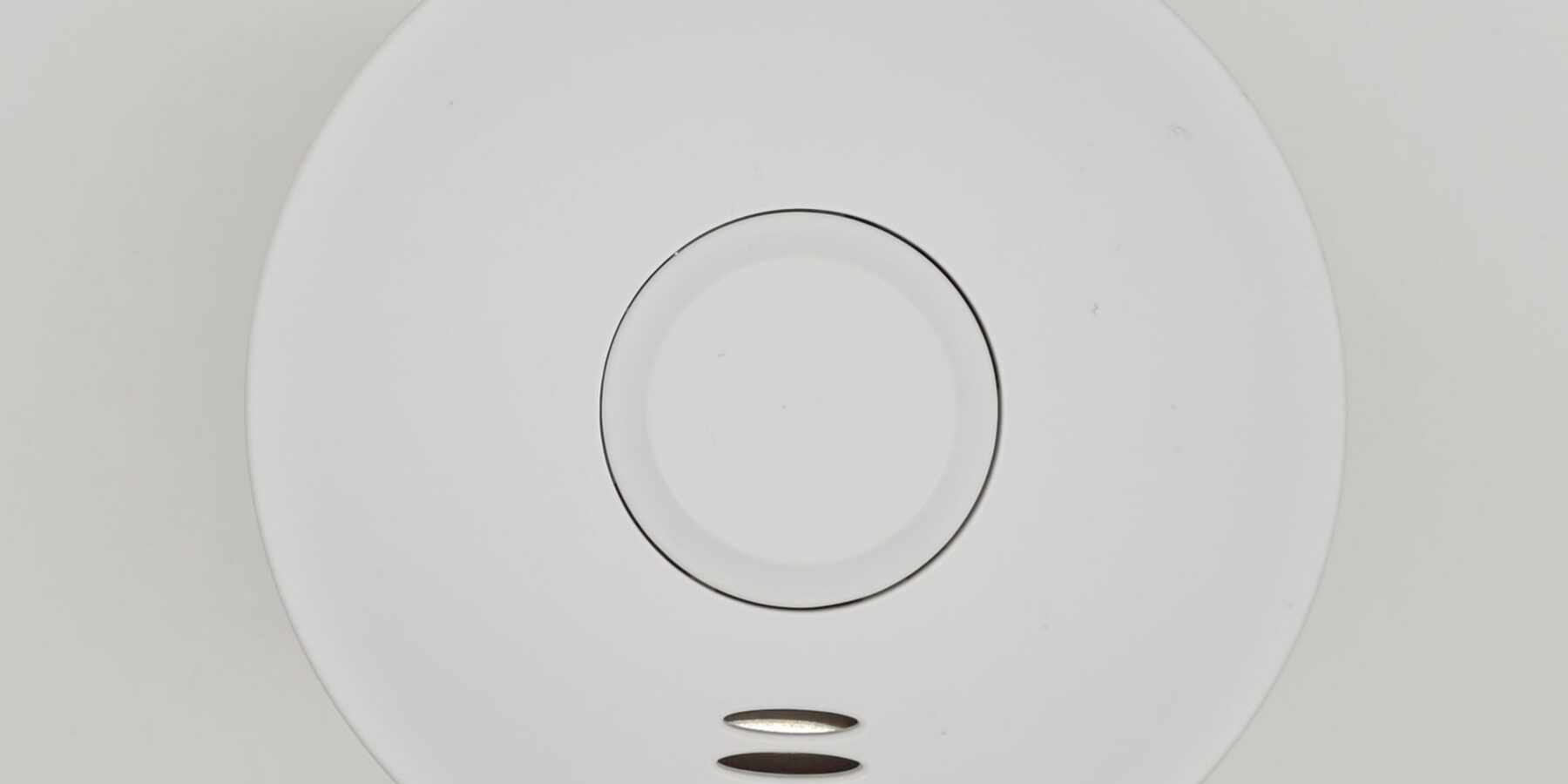
Each alarm must be photoelectric and comply with AS 3786-2014, must have been manufactured less than 10 years before it was installed, must work when tested, and must be interconnected to every other alarm in the home (Fire Services Act 1990, section 147Z). The regulation names two ways to power an alarm: hardwired to the home’s electricity supply, or a battery built into the alarm so it cannot be removed and made to power it for at least 10 years (Building Fire Safety Regulation 2008, section 55D). Nothing else qualifies, which is why the old nine volt battery alarm is finished whatever its sensor type.
Interconnection is defined by behaviour, not wiring: alarm A is interconnected to alarm B if A sounds when B detects smoke and B sounds when A does (section 147Z(6)). Wireless alarms that pair with each other meet that. So do hardwired alarms linked by cable. So does a mix, where the models are designed for it.
The one rule that forces hardwired
If the alarm you are replacing is hardwired to the mains, the replacement must be hardwired too (section 148A(3)). That single sentence decides most existing homes. A home built or rewired with hardwired alarms stays hardwired, alarm for alarm. A home with only battery alarms, or with bedrooms that never had an alarm at all, can go fully wireless, and new alarms can be added wirelessly to the rooms that need them.
Who can install each
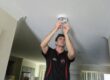
Fitting, replacing and maintaining a battery powered smoke alarm in a house or an apartment unit needs no electrical or fire protection licence in Queensland; the licensing law carves it out by name. That is the work we do ourselves, and it is why a wireless upgrade is a same day job. A hardwired alarm is electrical work. A licensed electrician fits it, and we organise it when a home needs one.
What each costs
- Wireless, sealed 10 year battery, interconnected: one set price per alarm installed, published on our pricing page. A three bedroom single storey house with one hallway needs four alarms, fitted, paired and tested in one visit.
- Hardwired: quoted for the home, because an electrician’s time and the wiring run decide it.
Both kinds last 10 years from their manufacture date, and both must be replaced at that point under the Act. Neither needs a battery change in between.
Which we recommend
For a home that is not already hardwired: wireless. It meets the law in full, it is fitted the same day, and there is nothing to wire. For a home that is hardwired: keep it hardwired where the alarms already are, and add wireless alarms in the bedrooms that have none, with a hardwired model that pairs wirelessly so the whole home sounds together. We will tell you which applies when we count the alarms on the day.
If you take the annual service plan, priced per year on the same page, every alarm we supply is covered for its full 10 year life while you stay on the plan, and the yearly check keeps the pairing proven. A Certificate of Compliance is available on request once the invoice is paid.
Call the office on (07) 3349 0636, or send your details through the contact form and we’ll get back to you. Book my upgrade. Brisbane, Logan, Ipswich, Redlands and Moreton Bay.